
Mastering the Art of Kombucha: Your Definitive Guide to Growing Your Own SCOBY

Have you discovered the delightful world of kombucha yet? This tangy, slightly effervescent beverage has captured the hearts (and guts!) of many, including mine, thanks to its impressive array of health benefits. Often hailed as the “elixir of life,” kombucha effortlessly sells itself through its incredible reputation and the noticeable positive impact it has on well-being. Whether you’re seeking relief after a heavy meal, aiming for a balanced digestive system, or simply bolstering your immunity and overall vitality, kombucha offers a refreshing path forward. Its purported advantages span from aiding digestion and fostering a flat belly to potentially supporting joint health and even contributing to disease prevention. Convinced yet of its remarkable potential?
The High Cost of Convenience: Why Store-Bought Kombucha is a Splurge
While the allure of kombucha is undeniable, the price tag at your local grocery store can quickly become a deterrent. Ranging from $3.99 to an astounding $5.99 per bottle, making kombucha a daily habit can swiftly deplete your budget. This financial hurdle often leads many to believe that brewing kombucha at home is an intimidating, complex process reserved only for seasoned health gurus or those deeply entrenched in sustainable living practices. The good news is, this couldn’t be further from the truth! Even for someone who considers themselves to have a “brown thumb” when it comes to growing things, I can assure you that homebrewing kombucha is surprisingly straightforward. All you truly need are a few basic ingredients: sweet tea, a little starter kombucha, and the star of the show – a SCOBY. And if that last word makes your eyes glaze over, don’t worry, we’re about to demystify it completely.
Decoding the SCOBY: The Heart of Your Kombucha Brew
So, what exactly is a SCOBY? The acronym stands for Symbiotic Culture of Bacteria and Yeast. It’s a living, gelatinous disc, often resembling a mushroom or a pale, rubbery pancake, composed of beneficial microorganisms essential for fermentation. Think of it as a friendly ecosystem of “good” bacteria and yeast working in harmony to transform simple sweet tea into the complex, flavorful, and health-promoting beverage we know as kombucha. This remarkable culture is what gives kombucha its characteristic tang, fizziness, and all those rich historical health benefits. While its appearance might seem a little unusual, or even a bit “scary” to the uninitiated, rest assured that once you begin working with it, the initial intimidation quickly fades, replaced by fascination and appreciation for this natural wonder.
Sourcing Your SCOBY: Your Options Explored
Now that you know what a SCOBY is, the next question is, where do you get one? Luckily, there are several avenues to acquire this crucial component for your homebrewing adventures.
The Friendly SCOBY Share: A Community Approach
If you’re fortunate enough to have friends who are already immersed in the world of kombucha brewing, you’re in luck! Every time a new batch of kombucha is fermented, the original SCOBY (often called the “mother”) produces a new layer, or a “baby SCOBY.” Since you only need one SCOBY per brewing vessel, homebrewers often find themselves with an abundance of these probiotic powerhouses. It’s common practice to share these extra SCOBYs, passing them on to eager beginners and fostering a wonderful sense of community. Don’t be shy to ask around – you might just find yourself gifted with your first SCOBY!
Purchasing a SCOBY: Convenience at Your Fingertips
For those without a network of kombucha-brewing pals, purchasing a SCOBY is a readily available option. High-quality SCOBYs can be ordered online from various specialized retailers for around $15. These commercially available SCOBYs often come packaged with starter tea, providing a reliable and ready-to-use foundation for your brewing journey. While this route involves a small investment, it offers immediate access to a healthy culture, allowing you to dive into brewing without delay.
The DIY Route: Growing Your Own SCOBY from Scratch (The Smart & Frugal Way)
However, there’s a third, incredibly satisfying, and budget-friendly option: growing your very own SCOBY from a bottle of store-bought kombucha. This is exactly the path I took, transforming a $4 bottle of unflavored kombucha and a simple batch of homemade sweet tea into a thriving SCOBY. Beyond the significant cost savings, there’s an immense sense of accomplishment and a touch of “hippie badass” pride that comes with nurturing your own culture. Imagine peering into your jar after a few weeks to discover a curious, floating, jellyfish-like organism – your very own SCOBY, born from a blend of science and patience! It truly feels like magic.
Your Step-by-Step Guide to Growing a SCOBY from a Bottle of Kombucha
Growing your own SCOBY is a process that requires minimal effort but a good deal of patience. Follow these detailed instructions, and you’ll soon be ready to brew batch after batch of delicious, homemade kombucha.
What You’ll Need: Equipment & Ingredients
- Large Glass Jar: A gallon-sized (3.8-liter) glass jar is ideal for ample space. Ensure it’s thoroughly cleaned and sterilized.
- Breathable Cover: A coffee filter, cheesecloth, or a tightly woven clean cloth (like a linen napkin) is perfect. This allows airflow while keeping out dust and fruit flies.
- Rubber Band: To secure the cover tightly around the jar’s opening.
- Black or Green Tea: 4-6 regular tea bags or 2 tablespoons of loose-leaf tea. Avoid flavored teas, as essential oils can harm the SCOBY. Black tea is often recommended for robust SCOBY growth.
- Granulated Sugar: ½ cup (about 100g) of white granulated sugar. Do not substitute with artificial sweeteners, honey, or agave, as these can interfere with fermentation or introduce unwanted bacteria.
- Filtered Water: 4 cups (about 1 liter). Using filtered water helps prevent chlorine or other chemicals from affecting the SCOBY.
- Unflavored, Raw Kombucha: 1 bottle (16 oz / 473ml) of unpasteurized, unflavored kombucha. This is your “starter liquid” and the source of your new SCOBY. Ensure it’s raw to contain live cultures.
- Measuring Cups and Spoons: For accurate ingredient amounts.
- Saucepan: For boiling water and brewing tea.
- Long Spoon or Stirring Utensil: For mixing.
The Brewing Process: A Simple Path to Your First SCOBY
This process will create a strong starter tea, also known as the “sweet tea,” which provides the necessary nutrients for your SCOBY to grow.
- Brew the Sweet Tea:
- In your saucepan, bring 4 cups of filtered water to a rolling boil.
- Remove the pan from the heat and add your tea bags or loose-leaf tea. Steep for 5-7 minutes (or according to package directions for strength).
- Remove the tea bags/strain out loose leaves.
- Stir in the ½ cup of granulated sugar until it is completely dissolved.
- Allow the sweet tea to cool completely to room temperature. This step is crucial! Introducing a SCOBY or starter kombucha to hot liquid will kill the beneficial cultures. This might take several hours, so plan accordingly. You can speed up the process by placing the saucepan in an ice bath, stirring occasionally.
- Prepare Your Fermentation Vessel:
- Once the sweet tea is at room temperature, pour it into your clean, gallon-sized glass jar.
- Introduce the Starter Kombucha:
- Carefully pour the entire bottle of unflavored, raw kombucha into the jar with the sweet tea. This starter liquid is vital; it lowers the pH of the tea, preventing mold, and provides the initial bacteria and yeast cultures to kickstart SCOBY growth.
- Cover and Wait:
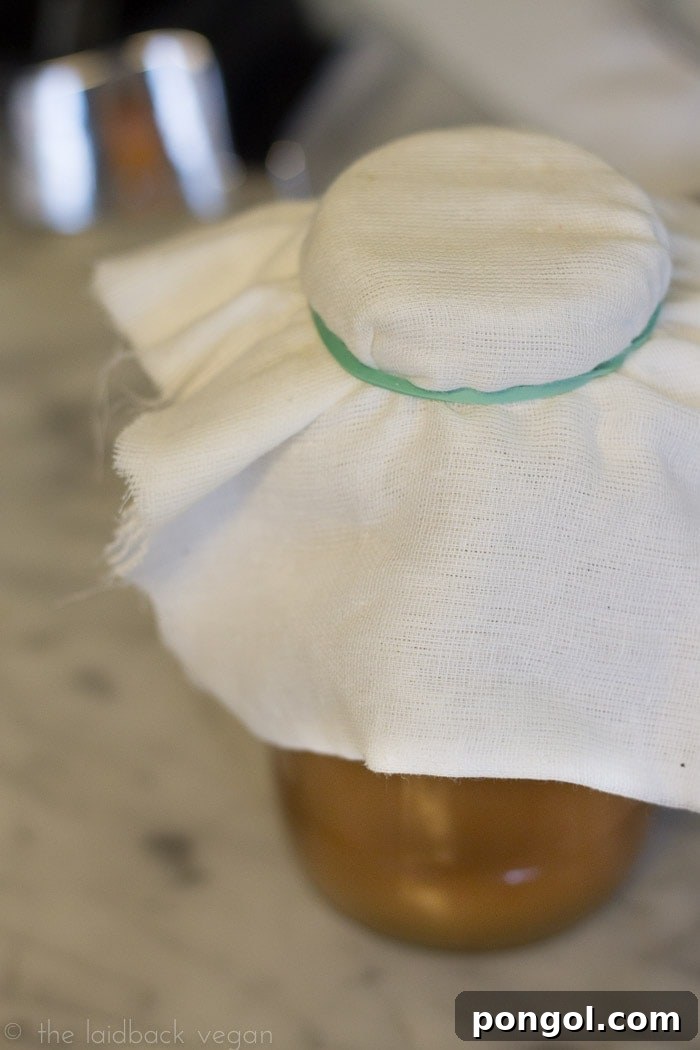
- Secure your breathable cover (coffee filter, cheesecloth) over the opening of the jar with a rubber band. This protects your brew from contaminants and fruit flies while allowing essential air circulation.
- Place the jar in a warm spot, ideally between 70-80°F (21-27°C), away from direct sunlight. A pantry, countertop away from drafts, or even on top of a refrigerator can work well.
- Avoid moving or disturbing the jar frequently. Let the magic happen!
- The Waiting Game (and What to Expect):
- Now comes the patience part! It can take anywhere from 1 to 4 weeks for a visible SCOBY to form. The timeline depends on your ambient temperature and the strength of your starter kombucha.
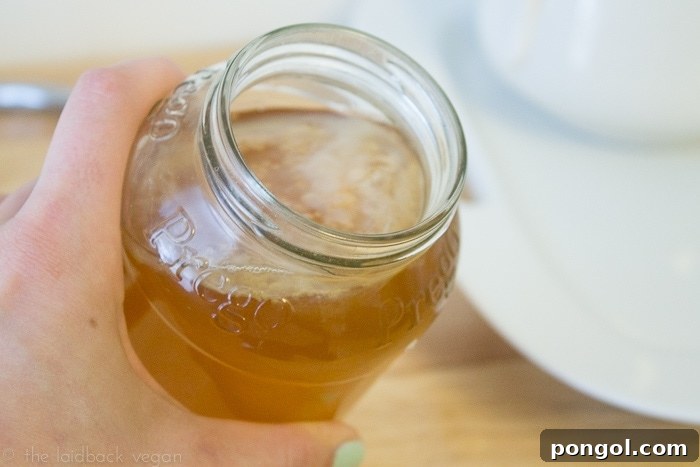
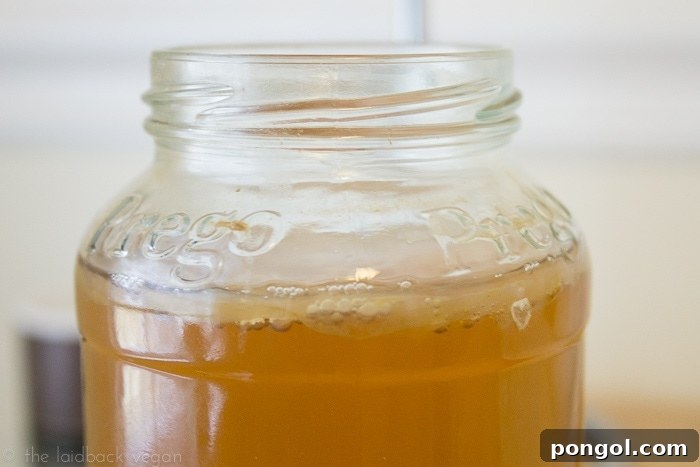
- Week 1-2: You might notice tiny bubbles forming on the surface, or a thin, cloudy film beginning to develop. This is the start of your SCOBY!
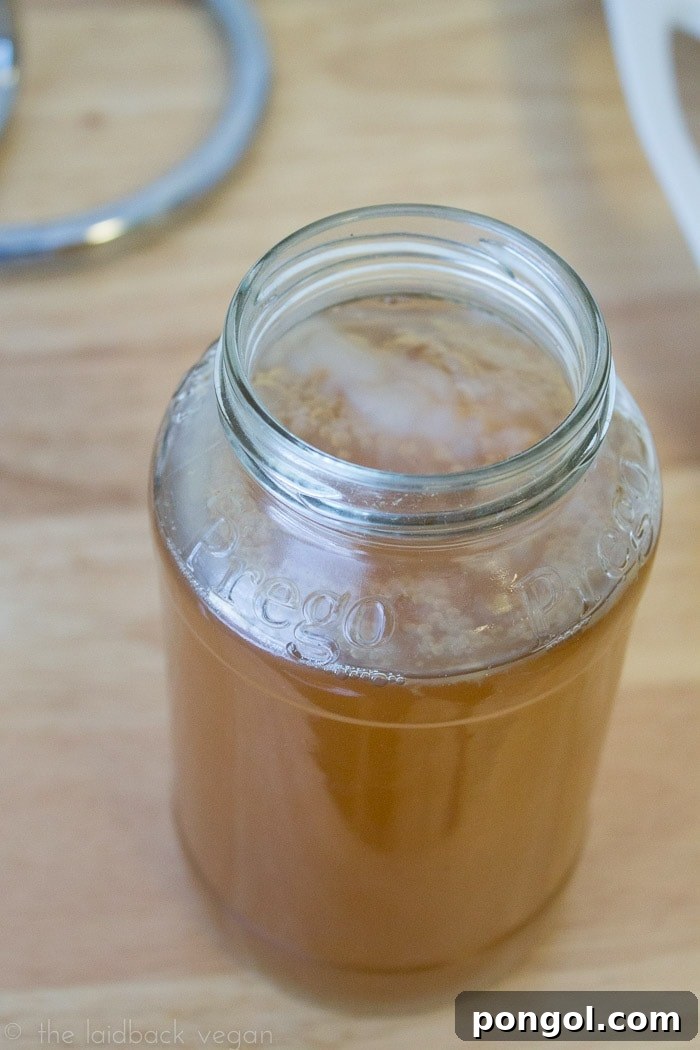
- Week 2-4: The film will gradually thicken, become more opaque, and spread across the surface of the liquid. It might look jelly-like, somewhat slimy, or even appear like a smooth pancake. It could be white, off-white, or slightly brownish.
- Smell: You’ll likely notice a vinegary, slightly sweet aroma. This is normal and indicates healthy fermentation.
- Don’t Panic: It’s common for the SCOBY to start as an uneven layer, or even sink and then float back up. All are normal stages of development. The key is to look for a consistent, coherent layer forming across the surface.
- Mold vs. SCOBY: This is a common concern. A healthy SCOBY will be smooth, sometimes bumpy, translucent or opaque, and may have stringy brown yeast particles hanging from it. Mold, on the other hand, will typically appear fuzzy, dry, powdery, or brightly colored (green, black, red) and will usually be circular and isolated to a specific spot. If you see mold, unfortunately, you must discard the entire batch and start over.
Harvesting Your Brand New SCOBY
You’ll know your SCOBY is ready when it has formed a solid disc, at least ¼ inch thick, and covers most of the surface of the liquid. The liquid underneath should also smell distinctly vinegary and no longer overly sweet. At this point, you have successfully grown your own SCOBY! Gently remove your new SCOBY with clean hands or tongs, reserving at least 1-2 cups of the liquid (this is your new “starter tea” for your first full batch of kombucha). You can now transfer your SCOBY to a fresh batch of sweet tea to begin brewing your very own kombucha!
Troubleshooting Your SCOBY Growth: Common Questions and Concerns
Even with careful attention, new brewers often encounter a few common scenarios. Here’s how to address them:
- “My SCOBY isn’t growing!” Patience is truly a virtue here. If after two weeks you see no activity, check your ambient temperature. If it’s too cool, fermentation slows significantly. Ensure you used raw, unflavored kombucha as your starter. Sometimes, a weak starter won’t have enough live cultures. Give it more time, up to 4 weeks.
- “Is that mold?” As mentioned, mold is fuzzy, dry, or distinctly colored (green, black, red). A SCOBY is typically smooth, slimy, or gelatinous. If in doubt, err on the side of caution and discard if you suspect mold.
- “My SCOBY sank!” This is perfectly normal! SCOBYs often sink, float, or even hang vertically. A new one will almost always form on the surface, where it has access to oxygen. Don’t worry about the one at the bottom.
- “My SCOBY has dark stringy bits!” These are yeast strands, a natural and healthy part of the SCOBY. They often appear dark brown and resemble sediment.
- “Why isn’t my tea fizzy yet?” The initial goal when growing a SCOBY is robust culture development. Fizziness comes later, during the second fermentation phase of full kombucha brewing. Your starter liquid won’t be fizzy, and your new SCOBY is still concentrating on growing.
What’s Next? Embarking on Your Kombucha Brewing Journey
Congratulations! You’ve successfully grown your very own SCOBY. This accomplishment marks the beginning of an exciting journey into the world of homebrewed kombucha. With your new SCOBY and the reserved starter liquid, you are now equipped to start brewing full batches of delicious, customized kombucha right in your kitchen. Imagine the satisfaction of crafting your own fizzy, probiotic-rich beverages, experimenting with different flavors, and sharing your creations with friends and family.
Stay tuned for upcoming articles where we’ll delve into the process of brewing your first batch of kombucha using your new SCOBY, explore creative flavor infusions, and even share some unexpected kombucha-based recipes (ever considered kombucha and vodka? It’s surprisingly delightful!). The possibilities are endless, and the rewards for your gut health and your wallet are immense. Welcome to the vibrant world of homebrewing – where healthy living meets DIY ingenuity!