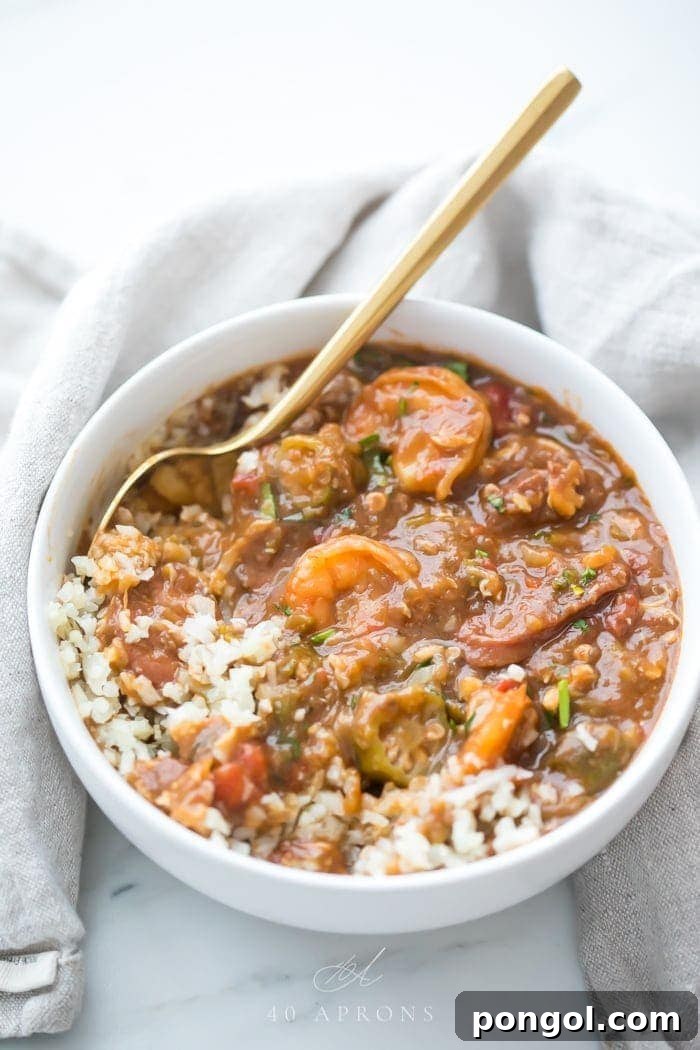
Authentic & Healthy Seafood Gumbo: Gluten-Free, Paleo, Whole30, Low Carb
Dive into the rich culinary heritage of New Orleans with a classic seafood gumbo, reimagined for a healthy lifestyle without compromising on authentic flavor. This hearty dish is meticulously crafted with a deep, dark roux, succulent sausage, tender okra, plump shrimp, and savory crabmeat, offering a truly satisfying experience. Remarkably, this recipe is entirely gluten-free, paleo, Whole30 compliant, and low carb, making it an ideal choice for various dietary needs. Forget quick fixes or shortcut versions – this is the real deal, demanding patience and passion to achieve its unparalleled depth of flavor.
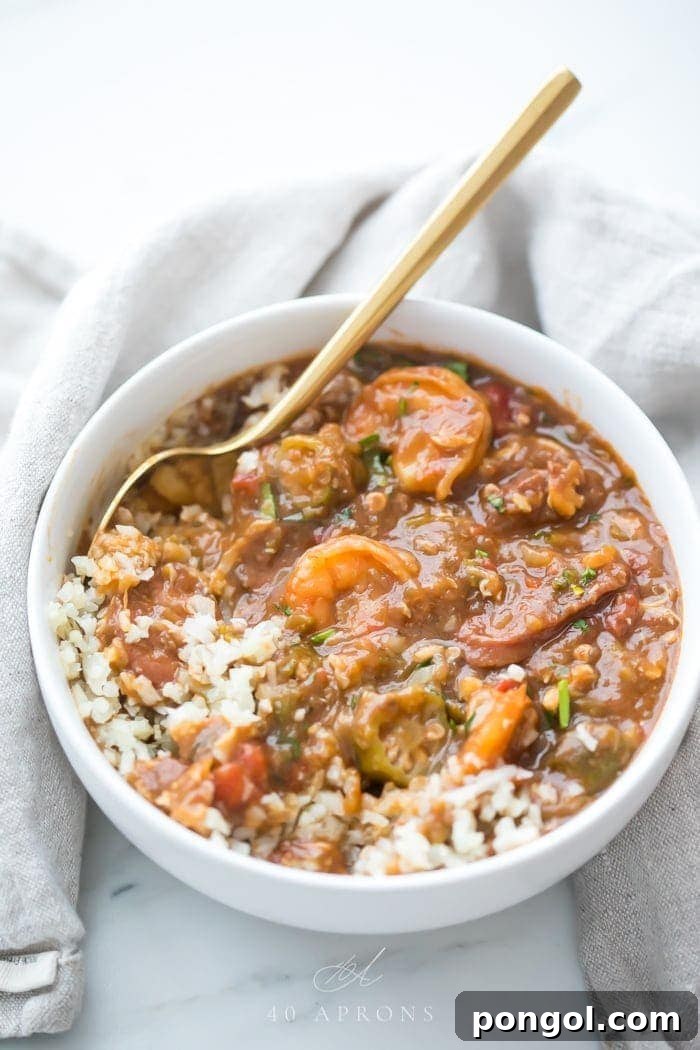
Embracing the Soul of New Orleans Cuisine
Gumbo is more than just a meal; it’s a celebration of culture, history, and community, deeply rooted in the heart of Louisiana. While I may not reside in New Orleans, living in Memphis places me close enough to embrace its vibrant spirit—from the powdered-sugar-dusted beignets to the soulful strains of a second line parade. It’s in this spirit that I share a fundamental truth: a true gumbo, the kind that whispers tales of the Bayou, simply isn’t gumbo without a proper roux.
Forget the notion of “quick and easy” when it comes to crafting this iconic dish. While culinary shortcuts have their place, they fall short of capturing the profound essence of gumbo. Any attempt to bypass the crucial roux-making process results in what’s essentially a flavorful stew, not a gumbo. The magic, the unmistakable character, and the rich, complex foundation of this New Orleans staple come directly from that dark, mahogany roux, patiently nurtured over time.
The Art of the Perfect Roux: Gumbo’s Foundation
Creating a roux is an act of culinary meditation. It’s the initial step that sets the stage for the entire dish, transforming simple fat and flour into a nutty, deeply flavorful base. This isn’t just about thickening; it’s about developing layers of flavor through a slow caramelization process. The roux dictates the ultimate taste, color, and texture of your gumbo, and it demands your full attention, much like a beloved story unfolding slowly.
And while the roux slowly develops its rich hue, your mind can drift to the “Holy Trinity” of Cajun and Creole cooking: onions, celery, and bell peppers. These aromatic vegetables, often combined with garlic, form the backbone of flavor in countless Louisiana dishes, and their role in gumbo is indispensable. They are the perfect complement to the deep, savory notes of a well-made roux.
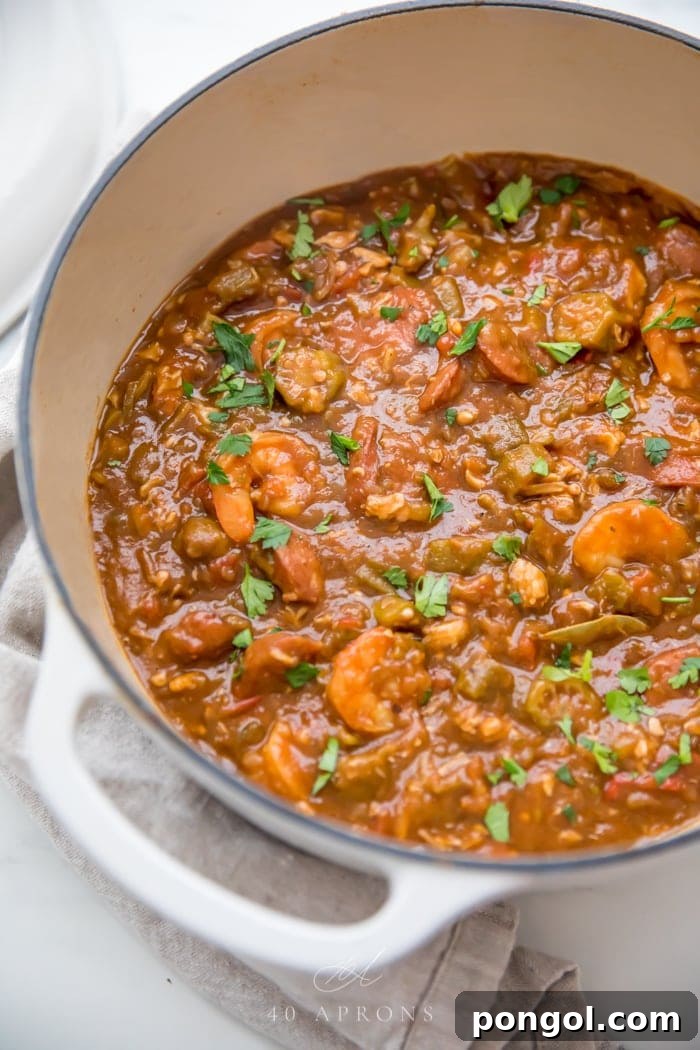
Beyond the roux, generous simmer time is equally crucial. This is not a weeknight rush meal, but rather a weekend project, a labor of love that rewards patience with unparalleled depth. Just as a fine wine develops character with age, a gumbo deepens in flavor as its ingredients slowly meld together over hours. This commitment to time and quality ingredients, infused with a generous dash of love, is what elevates a good dish to an extraordinary one, rivaling the best you’d find in a top-tier Cajun restaurant.
Why This Healthy Seafood Gumbo Recipe Stands Out
This particular seafood gumbo recipe offers a remarkable balance, delivering authentic New Orleans flavor while adhering to modern health-conscious dietary frameworks. It’s a testament to the idea that healthy eating doesn’t mean sacrificing taste or tradition.
- Truly Authentic Flavor Profile: At its heart, this is a *real* gumbo, distinguished by its deep, dark, and rich roux. Unlike traditional recipes that use all-purpose flour, ours achieves this depth with cassava flour, making it genuinely gluten-free without altering the characteristic nutty flavor and thickening power.
- Dietary Inclusivity Without Compromise: Whether you’re following a Whole30, paleo, or low-carb diet, this gumbo fits seamlessly into your meal plan. The beauty is, you would never guess it’s so diet-friendly, as it delivers all the robust flavors you expect from an authentic gumbo.
- Hearty & Nutrient-Dense: Loaded with flavorful sausage, tender shrimp, succulent crabmeat, ripe tomatoes, and nutritious okra, this gumbo is incredibly hearty and filling. Each spoonful offers a medley of textures and tastes, ensuring a satisfying meal that nourishes the body.
- Versatile Serving Options: While delicious on its own, this seafood gumbo pairs beautifully with a side of steamed cauliflower rice for those on a low-carb journey. Alternatively, traditional white rice makes for a classic pairing for others.
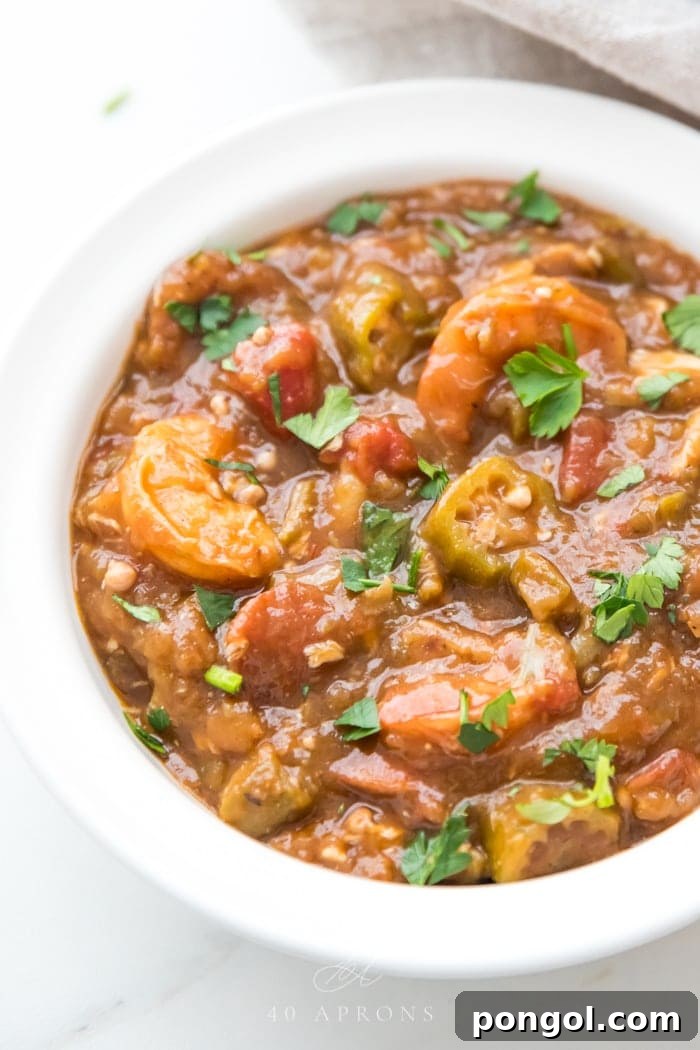
Creole vs. Cajun: The Tomato Debate
The inclusion of tomatoes in gumbo often sparks a friendly debate among Louisiana food enthusiasts, distinguishing between Cajun and Creole styles. Generally, Creole gumbos, born in the urban kitchens of New Orleans, tend to feature tomatoes and a wider array of seafood, often alongside a lighter roux. Cajun gumbos, originating from rural Louisiana, typically omit tomatoes and rely on a darker roux with more emphasis on local meats and freshwater seafood.
This particular recipe, inspired by an authentic family seafood gumbo, embraces tomatoes. As a general rule of thumb, you’ll often find tomatoes in gumbos that include okra, and this recipe is no exception. The subtle acidity from the tomatoes complements the earthiness of the okra beautifully, adding another layer of complexity to the dish and lending it more of a Creole character.
Is This Seafood Gumbo Low Carb & Keto-Friendly?
Absolutely! Each serving of this wholesome seafood gumbo contains approximately 10g net carbs, making it an excellent option for those adhering to a low-carb lifestyle. For those on a ketogenic diet, it can also be a fantastic addition. To keep it strictly low-carb or keto, serve your gumbo over a bed of steamed cauliflower rice instead of traditional rice. While cauliflower rice is a great substitute, always monitor your daily net carb intake, as individual portions, combined with the gumbo, might push some on a strict keto regimen close to their carb limits.
Crafting Your Perfect Seafood Gumbo: A Step-by-Step Guide
Making gumbo is a journey, not a sprint. Each step contributes to the final masterpiece, from the slow development of the roux to the gentle simmer that marries all the flavors. Follow these steps meticulously, and you’ll be rewarded with a gumbo that tastes like it came straight from a New Orleans kitchen.
The Roux: Your Journey to a Deep Amber Hue
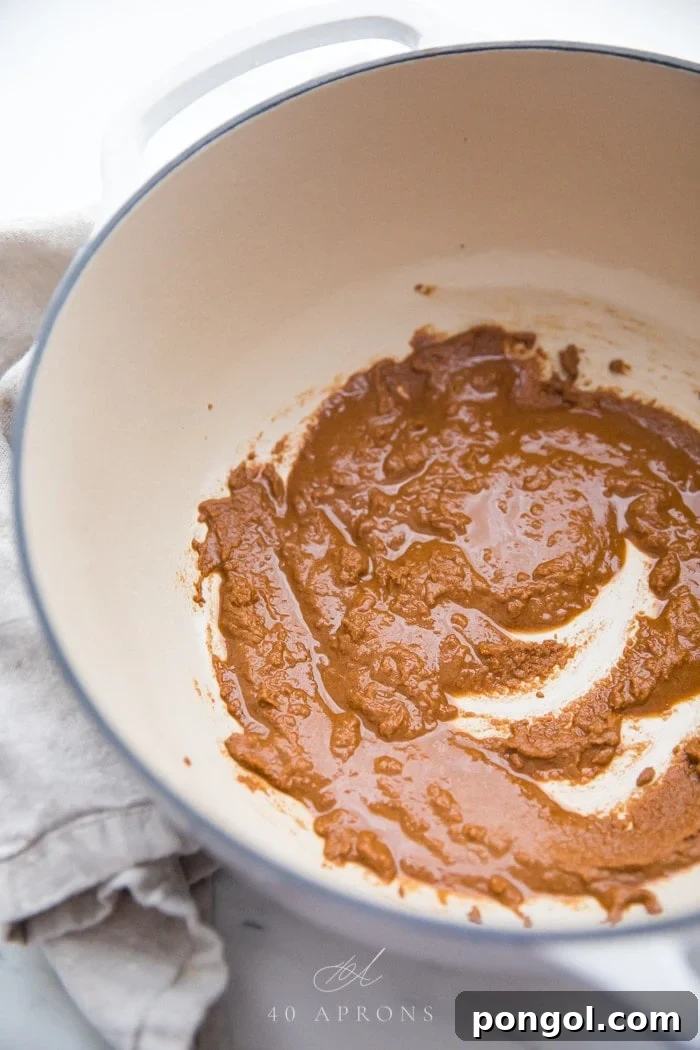
Begin by heating ⅓ cup of rich bacon drippings in a large Dutch oven over medium-low heat. Once shimmering, gradually sprinkle in the ½ cup of cassava flour, whisking continuously until a smooth paste forms. This is where patience truly comes into play. Continue to cook this mixture over medium-low heat, stirring almost constantly, for approximately 30 minutes. Your goal is to achieve a deep amber color, reminiscent of milk chocolate. Do not let it burn; the process should be slow and gradual, as this careful development is what imparts the characteristic nutty flavor and depth to your gumbo.
Building Flavor: The Holy Trinity and Simmering
While your roux is busy developing its beautiful color, efficiently prepare your “Holy Trinity.” Pulse ½ cup of celery, 1 cup of onion, 1 cup of green bell pepper (seeded and roughly chopped), and 1 minced clove of garlic in a food processor a few times until the mixture is finely and uniformly chopped. This ensures even cooking and distribution of flavor.
Once your roux has reached that perfect deep amber, stir in your chopped Holy Trinity mixture and the sliced sausage. Mix thoroughly until everything is well combined. Add 1 cup of water and whisk vigorously to incorporate. Bring this mixture to a gentle simmer over medium heat, allowing the vegetables to soften, which typically takes about 15 minutes. Keep a watchful eye; if the mixture starts to stick or scorch at the bottom of the Dutch oven, add the second cup of water to prevent it.
Simultaneously, bring 4 cups of beef broth to a boil in a medium saucepan. If you haven’t used both cups of water yet, add the remaining water to the saucepan to heat with the broth. Once the roux-vegetable mixture is ready and the broth is hot, carefully stir the hot broth into the Dutch oven, whisking well to combine seamlessly. Now, stir in 1 tablespoon of coconut aminos, 1½ to 2 teaspoons of salt, 1 tablespoon of Louisiana hot sauce, 1 teaspoon of Cajun seasoning, 2 bay leaves, ¼ teaspoon of dried thyme leaves, and the 14.5-ounce can of diced tomatoes (with their juice). Stir everything together. Reduce the heat to low to medium-low and let your gumbo simmer for a full 2 hours. The goal is a consistent, gentle bubble, not a rolling boil, which allows the flavors to truly meld and deepen. If you’ve managed to find gumbo filé powder, add 1 teaspoon after the first hour of simmering.
The Grand Finale: Adding Seafood and Okra
As the gumbo continues its long, slow simmer, it’s time to prepare the okra. Heat 1 tablespoon of avocado oil (or more bacon grease for extra flavor) in a separate skillet or the saucepan previously used for the beef broth. Add the thawed, cut okra and 1 tablespoon of white vinegar. Cook over medium heat for about 15 minutes, stirring occasionally, until the okra is softened and takes on a slightly sticky texture. The vinegar helps to minimize the natural “sliminess” of the okra, making it more palatable.
Once the okra is ready, stir it into the simmering gumbo. Then, gently fold in 8 ounces of drained lump crabmeat and 1½ pounds of peeled and deveined uncooked medium shrimp. Continue to simmer the gumbo over low heat for an additional 45 minutes. This final simmer allows the delicate seafood to cook through perfectly and its flavors to infuse into the rich broth without becoming overcooked. If you’re using gumbo filé, stir in the remaining 1 teaspoon just before serving to add its distinct earthy aroma and subtle thickening effect.
Serving Your Masterpiece
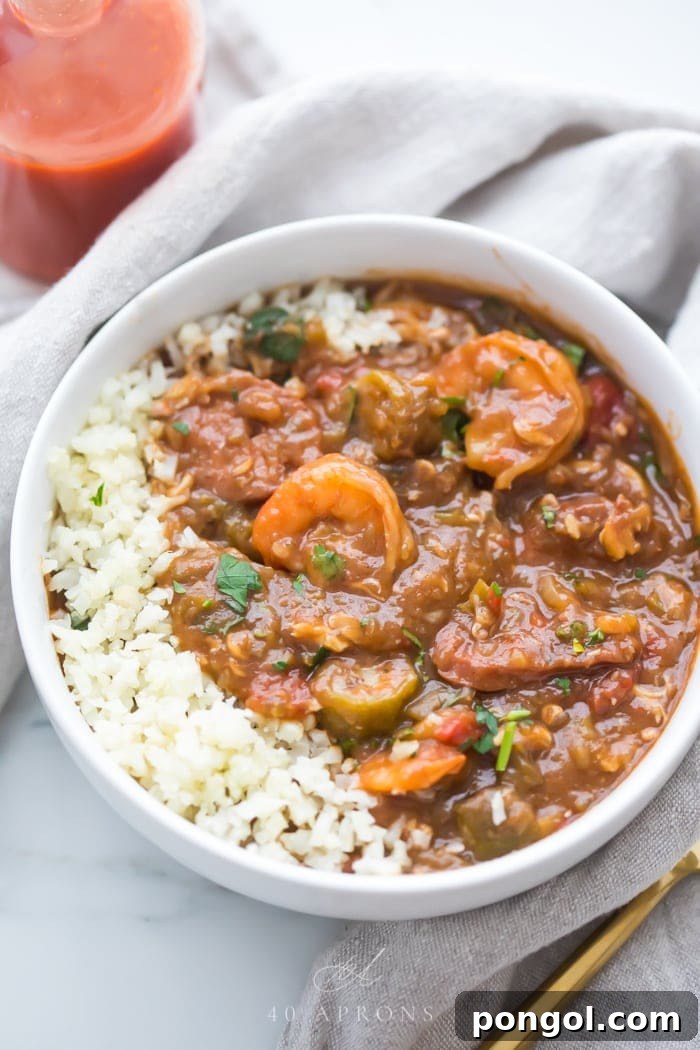
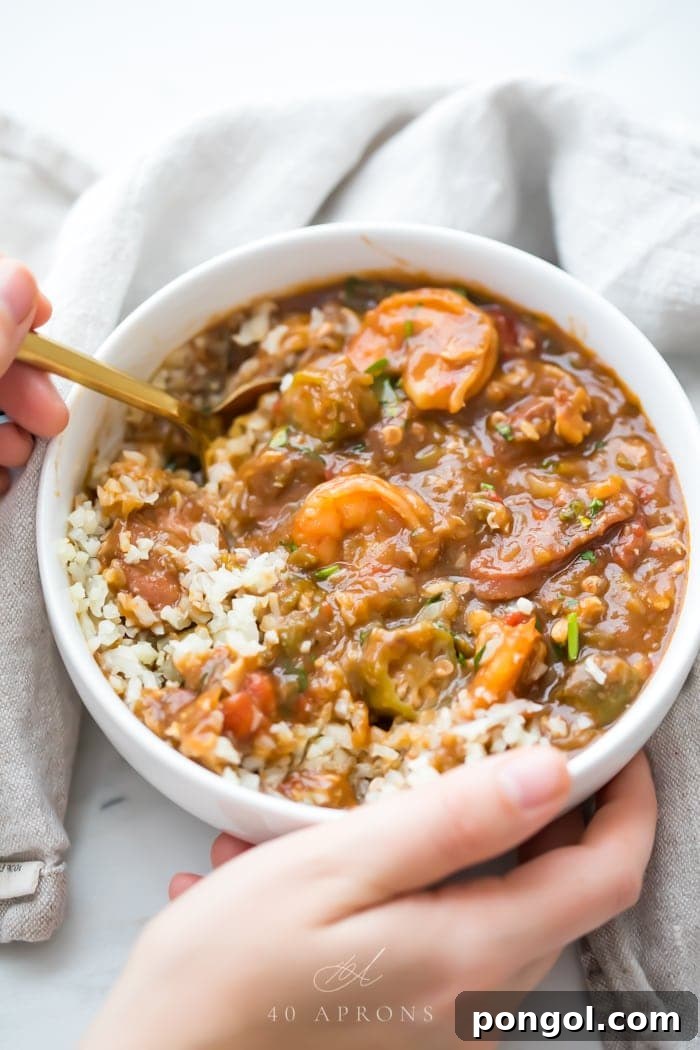
Ladle your deeply flavorful and aromatic seafood gumbo into bowls. For those embracing a low-carb diet, serve it with a generous portion of steamed cauliflower rice, either mixed directly into the gumbo or elegantly inverted into the center of the bowl for an appealing presentation. Finish with a sprinkle of freshly chopped parsley, if desired, to add a vibrant pop of color and a touch of fresh herbaceousness. Prepare to savor a truly authentic taste of New Orleans!
The Healthy Secret: Gluten-Free & Clean Ingredients
What truly sets this gumbo apart as a healthy choice is its smart ingredient substitutions and adherence to whole, unprocessed foods. The most significant innovation lies in using cassava flour instead of traditional all-purpose wheat flour for the roux. Cassava flour is a fantastic gluten-free alternative that behaves remarkably similar to wheat flour in roux, producing that desired deep color and thickening power without any gluten, making it suitable for individuals with gluten sensitivities, intolerances, celiac disease, or those following a paleo or Whole30 lifestyle.
Beyond being gluten-free, this recipe prides itself on its clean ingredient list. There are no added sugars, whether refined or unrefined, ensuring a naturally savory profile. Furthermore, you won’t find any artificial preservatives or strange additives here. It’s a testament to how traditional, wholesome ingredients can be adapted to meet modern health requirements while still delivering an unmistakably authentic and delicious experience. I highly recommend investing in a bag of quality cassava flour, as its versatility extends far beyond gumbo, performing beautifully in many other grain-free recipes. Please note that almond flour, tapioca starch, or arrowroot powder will not yield the same results and cannot be substituted for cassava flour in this recipe.
Frequently Asked Questions About Gumbo
- Can I make this gumbo ahead of time? Yes, gumbo often tastes even better the next day as the flavors have more time to meld. Prepare the gumbo up to the point of adding seafood, then cool and refrigerate. Reheat gently on the stove, then add the seafood and finish cooking as instructed.
- How long does gumbo last in the fridge/freezer? Cooked gumbo can be stored in an airtight container in the refrigerator for up to 3-4 days. It also freezes exceptionally well for up to 3 months. Thaw overnight in the fridge before reheating.
- What if I can’t find gumbo filé? Gumbo filé is optional but adds a traditional flavor and slight thickening. If you can’t find it, don’t worry! Your gumbo will still be incredibly flavorful without it.
- Can I use different types of sausage or seafood? Absolutely! While Aidell’s Chicken and Apple sausage is Whole30 compliant, feel free to use traditional Andouille sausage if not on Whole30 for an even more authentic Cajun flavor. For seafood, feel free to adjust based on availability and preference; oysters, crawfish, or even firm white fish can be delightful additions.
More Louisiana-Inspired & Healthy Recipes You’ll Love
- Jambalaya with Sausage and Shrimp
- Gumbo Roux (Dark Cajun Roux)
- Chicken and Sausage Gumbo
- Quick & Easy Blackened Shrimp
- Garlicky Broiled Shrimp
- Sauteed Shrimp in Garlic Butter Sauce
- Cajun Shrimp Bisque
- New Orleans BBQ Shrimp Po-Boy
- Cajun 15-Bean Vegetarian Gumbo
- Shrimp and “Grits” Recipe
- Zuppa Toscana
- BBQ Shrimp (New Orleans Style)
- Shrimp and Grits
Healthy Authentic Seafood Gumbo (Gluten-Free, Paleo, Whole30)
An authentic New Orleans seafood gumbo turned healthy, gluten-free, paleo, low-carb, and Whole30. Featuring a real, rich roux, sausage, shrimp, and crab, this hearty dish delivers profound flavor without compromise.
Prep time: 5 minutes
Cook time: 3 hours 10 minutes
Total time: 3 hours 15 minutes
Servings: 10
Ingredients
- ½ cup cassava flour
- ⅓ cup bacon drippings (see note 1)
- ½ cup celery, roughly chopped
- 1 cup onion, roughly chopped
- 1 cup green bell pepper, seeded and roughly chopped
- 1 clove garlic, minced
- ½ pound Aidell’s Chicken and Apple sausage, sliced (see note 2 if not on Whole30)
- 4 cups beef broth
- 2 cups water
- 1 tablespoon coconut aminos
- 1 ½ – 2 teaspoons salt
- 1 tablespoon Louisiana hot sauce
- 1 teaspoon Cajun seasoning blend (see note 3)
- 2 bay leaves
- ¼ teaspoon dried thyme leaves
- 1 14.5-ounce can diced tomatoes in juice
- 2 teaspoons gumbo filé powder, divided (optional, see note 4)
- 1 tablespoon avocado oil or more bacon grease
- 1 10-ounce package frozen cut okra, thawed
- 1 tablespoon white vinegar
- 8 ounces lump crabmeat, drained
- 1 ½ pounds uncooked medium shrimp, peeled and deveined
- Steamed cauliflower rice for serving (optional)
- Fresh parsley, chopped, for serving (optional)
Instructions
- Prepare the Roux: Heat ⅓ cup bacon drippings in a large Dutch oven over medium-low heat. Sprinkle in cassava flour and whisk constantly until a smooth paste forms. Continue cooking and whisking for about 30 minutes, or until it develops a deep amber color, resembling milk chocolate. Patience is key here; do not rush this step, as it forms the flavorful base of your gumbo.
- Chop the Holy Trinity: While the roux is cooking, add your celery, onion, bell pepper, and garlic to a food processor. Pulse a few times until the mixture is finely chopped and uniform.
- Combine Roux and Holy Trinity: Once the roux reaches the desired deep amber color, stir in the finely chopped celery, onion, bell pepper, and garlic mixture. Add the sliced sausage and mix well. Stir in 1 cup of water and whisk thoroughly. Bring the mixture to a simmer over medium heat and cook until the vegetables begin to soften, about 15 minutes. If the mixture starts to stick to the bottom, add the second cup of water to prevent scorching.
- Simmer the Broth: In a separate medium saucepan, bring 4 cups of beef broth to a boil. If you reserved the second cup of water from the previous step, add it to the saucepan with the broth now. Carefully pour the hot broth into the roux-vegetable mixture in the Dutch oven and whisk thoroughly until fully combined.
- Build the Gumbo Base: Stir in coconut aminos, salt, Louisiana hot sauce, Cajun seasoning, bay leaves, dried thyme, and diced tomatoes. Reduce heat to low to medium-low and simmer for 2 hours, maintaining consistent gentle bubbles without boiling vigorously. If using, add 1 teaspoon of gumbo filé powder after 1 hour of simmering.
- Prepare Okra: During the gumbo’s simmering time, heat 1 tablespoon of avocado oil (or additional bacon grease) in a skillet or the saucepan previously used for broth. Add the thawed okra and white vinegar. Cook over medium heat for about 15 minutes, stirring occasionally, until the okra is softened and slightly sticky.
- Add Seafood & Final Simmer: Stir the cooked okra into the gumbo. Gently fold in the lump crabmeat and uncooked shrimp. Continue to simmer over low heat for another 45 minutes, allowing the flavors to meld and the seafood to cook through. If using, stir in the remaining 1 teaspoon of gumbo filé powder just before serving.
- Serve: Ladle the rich seafood gumbo into bowls. For a low-carb option, serve over steamed cauliflower rice, either stirred in or inverted elegantly into the center of the bowl. Garnish with freshly chopped parsley, if desired, for a pop of color and freshness.
Recipe Notes
- Note 1: Bacon Drippings: If you don’t have bacon drippings, avocado oil or another high-smoke-point fat can be used as a substitute, though bacon drippings impart a unique flavor.
- Note 2: Sausage Choice: For the most authentic flavor (and if not adhering to Whole30 or grain-free diets), Andouille sausage is highly recommended. For Whole30, ensure your chosen sausage is compliant (like Aidell’s Chicken and Apple).
- Note 3: Cajun Seasoning: Always check the ingredients of your Cajun seasoning blend to ensure it aligns with your dietary needs (Whole30, paleo, etc.). Many simple, compliant recipes exist if you prefer to make your own.
- Note 4: Gumbo Filé Powder: Gumbo filé (pronounced “fee-lay”) is a traditional sassafras leaf powder used to thicken and flavor gumbo. It can be hard to find in some areas. While optional, it adds an authentic touch. Don’t stress if you can’t locate it; the gumbo will still be delicious.
Nutrition Information (Approximate Per Serving)
Approximate Information for One Serving:
- Calories: 273 cal
- Protein: 24 g
- Fat: 13 g
- Saturated Fat: 4 g
- Cholesterol: 204 mg
- Sodium: 1426 mg
- Potassium: 390 mg
- Total Carbs: 12 g
- Fiber: 2 g
- Sugar: 3 g
- Net Carbs: 10 g
- Vitamin A: 440 IU
- Vitamin C: 29.7 mg
- Calcium: 172 mg
- Iron: 3 mg
Number of total servings shown is approximate. Actual number of servings will depend on your preferred portion sizes. Nutritional values shown are general guidelines and reflect information for 1 serving using the ingredients listed, not including any optional ingredients. Actual macros may vary slightly depending on specific brands and types of ingredients used. To determine the weight of one serving, prepare the recipe as instructed. Weigh the finished recipe, then divide the weight of the finished recipe (not including the weight of the container the food is in) by the desired number of servings. Result will be the weight of one serving.
Did You Make This Recipe?
Tag @40aprons on Instagram and be sure to leave a review on the blog post!