The Ultimate Guide to Non-Perishable Foods: Stocking Your Healthy & Resilient Pantry
Building a well-stocked pantry is a cornerstone of smart home management. Whether you’re aiming for everyday convenience, significant cost savings on groceries, or robust preparedness for unexpected situations, having a reliable collection of non-perishable foods is absolutely essential. This comprehensive guide will walk you through an extensive list of healthy, long-lasting options, ensuring you always have wholesome and versatile ingredients on hand. Get ready to transform your pantry into a resilient, versatile, and stress-free resource, capable of supporting your family through any circumstance.
Click here to download your FREE printable non-perishable foods shopping list!
What Exactly Does “Non-Perishable” Mean for Your Pantry?
At its core, a non-perishable food is any item that does not require refrigeration or freezing to maintain its quality and safety, and which possesses a significantly extended shelf life compared to fresh produce, dairy, or meats. While these foods aren’t truly immortal and do have best-by or expiration dates, their inherent stability makes them incredibly valuable for a multitude of purposes. They are the ideal foundation for an emergency pantry, providing peace of mind and sustenance during power outages, natural disasters, or other unforeseen events. Beyond crises, non-perishables are equally beneficial for everyday meal planning, offering greater flexibility, reducing the need for frequent grocery runs, and empowering you to cook delicious, nutritious meals even when your fresh supplies are low.
The true advantage of these long shelf life foods lies in their robust nature. When stored correctly—typically in a cool, dark, and dry environment—many non-perishable items can last for months, or even years, without compromising quality. This characteristic makes them perfect for bulk purchasing, which often leads to cost savings, and helps significantly in reducing food waste. From essential baking ingredients to protein-packed options and convenient meal components, a thoughtful selection of non-perishables forms the backbone of a resilient, cost-effective, and healthy kitchen, enabling you to be prepared and eat well at all times.
Baking Supplies: The Essential Building Blocks for Homemade Goodness
Having a well-stocked collection of baking supplies in your pantry means you’re always ready to whip up anything from a batch of comforting cookies to homemade artisan bread, a wholesome dessert, or even savory dishes. These foundational pantry staples aren’t just for elaborate baking projects; they are fundamental for everyday cooking, whether you’re thickening a sauce, coating proteins, or creating light and airy pancakes for breakfast. Keeping these key ingredients on hand fosters a sense of culinary self-sufficiency, encourages more creative and healthier cooking at home, and often translates to substantial savings compared to purchasing pre-made alternatives. To ensure their longevity and prevent spoilage, always store flours and leavening agents in airtight containers in a cool, dark place.
- All-purpose flour: The most versatile flour, suitable for nearly all baking and cooking needs.
- Almond flour: A popular gluten-free and low-carb alternative, excellent for pastries and delicate baked goods.
- Baking powder: A crucial leavening agent for achieving rise in cakes, muffins, and quick breads.
- Baking soda: Reacts with acidic ingredients to create lift, also a powerful natural cleaning agent.
- Bay leaves: Adds a subtle, warm, and aromatic depth to soups, stews, sauces, and braises.
- Brown sugar: Provides moisture and a distinctive molasses flavor, ideal for cookies, glazes, and savory dishes.
- Cassava flour: Another fantastic gluten-free, grain-free option, known for its fine texture and neutral flavor.
- Chickpea flour (Gram flour): High in protein and fiber, widely used in savory dishes, flatbreads, and gluten-free baking.
- Cocoa powder: Essential for rich, chocolatey desserts, hot cocoa, and even complex savory sauces like mole.
- Coconut sugar: A natural, unrefined sugar alternative with a pleasant caramel-like flavor profile.
- Gluten-free all-purpose flour: A specially formulated blend designed to perform like wheat flour for gluten-sensitive baking.
- Granulated sweeteners (e.g., Swerve, monk fruit): Low-calorie, natural sugar substitutes for healthier versions of your favorite sweet treats.
- Oat flour: Made from finely ground oats, it adds a wholesome texture and nutritional boost to baked goods.
- Powdered sugar (Confectioners’ sugar): Indispensable for silky smooth frostings, elegant glazes, and delicate dusting on desserts.
- Tapioca starch (Tapioca flour): An excellent thickening agent and binder, particularly valuable in gluten-free and dairy-free recipes.
- Vanilla extract: A ubiquitous flavor enhancer that elevates almost all sweet baked goods and desserts.
- White sugar (Granulated sugar): The most common and widely used sweetener, vital for a vast array of recipes.
Dried & Canned Beans: Protein Powerhouses for a Resilient Pantry
Beans are truly one of nature’s most remarkable superfoods and an indispensable component of any truly healthy pantry. Packed with a robust combination of plant-based protein, dietary fiber, and a wealth of essential vitamins and minerals, they offer incredible nutritional value for a very affordable price. Their culinary versatility is unmatched; beans can be enjoyed simply on their own as a nourishing side dish, mashed into savory dips, incorporated into hearty soups and stews, served over grains like rice or quinoa, or even, surprisingly, utilized in healthier dessert recipes like black bean brownies to add moisture and richness. Remarkably, studies suggest that properly stored dried beans can remain edible and nutritious for an impressive span of decades, solidifying their status as a top contender for long-term emergency food storage.
When choosing between dried and canned beans, both offer distinct advantages. Dried beans are generally more cost-effective and allow for complete control over sodium content, although they do require soaking and longer cooking times. Canned beans, conversely, offer unparalleled convenience – simply rinse them to reduce sodium, and they’re ready to add directly to your dish. For canned varieties, always prioritize “no salt added” or “low sodium” options to ensure your meals remain as healthy as possible. Regularly incorporating beans into your diet not only supports digestive health and helps manage blood sugar levels but also contributes significantly to satiety, making them an excellent choice for maintaining a balanced and nutritious lifestyle.
- Black beans: A staple in Latin American cuisine, excellent in tacos, burritos, chili, and vibrant salads.
- Chickpeas (Garbanzo beans): Incredibly versatile, perfect for hummus, roasted crunchy snacks, curries, and Mediterranean-inspired dishes.
- Kidney beans: Hearty and robust, they are a fundamental ingredient for classic chili and substantial stews.
- Lentils: Quick-cooking, highly versatile, and exceptionally high in protein and fiber, great for soups, dals, salads, and vegetarian burgers.
- Pinto beans: A cornerstone of Mexican and Southwestern cuisine, often used for delicious refried beans, burritos, and comforting stews.
Canned Fruits & Vegetables: Convenient Nutrition with an Extended Shelf Life
Canned fruits and vegetables provide an excellent and practical means of securing vital nutrients in a convenient, non-perishable format. A common misconception is that the canning process strips away all nutritional value; however, scientific evidence shows that these items tend to retain much of their vitamins and minerals. While the levels of some heat-sensitive vitamins, such as Vitamin C, may slightly decrease, many other crucial nutrients, including fiber, remain robust and readily available. This makes them invaluable additions to your collection of long shelf life foods, ensuring a source of vitamins and minerals even when fresh produce isn’t an option.
When selecting canned goods, particularly fruits, it’s crucial to be mindful of added sugars. Always opt for fruits packed in water or their own natural juice with no added sugar to avoid unnecessary caloric intake. For vegetables, actively seek out low-sodium or “no salt added” versions to maintain healthier blood pressure levels and reduce overall sodium consumption. Canned fruits are delightful on their own as a quick snack or simple dessert, while canned vegetables can instantly boost the nutrient content and flavor profile of stir-fries, casseroles, or side dishes. They offer unparalleled convenience, requiring no chopping, peeling, or extensive preparation, making them perfect for busy weeknights, last-minute meals, or situations where cooking time is limited.
- Artichokes (canned hearts): A gourmet addition, great for salads, pizzas, dips, or pasta dishes.
- Corn (canned): Sweet and versatile, adds a delightful crunch and color to salads, salsas, and various side dishes.
- Green beans (canned): A classic and easy-to-prepare side dish, effortlessly incorporated into casseroles or stews.
- Green chiles (canned): Essential for adding a mild, earthy heat and distinctive flavor to Mexican-inspired dishes, eggs, and casseroles.
- Olives (canned): Perfect for antipasto platters, salads, pizzas, or simply enjoyed as a savory snack.
- Pumpkin (canned puree): A nutritional powerhouse, incredibly versatile for baking (pies, muffins), soups, or even nutrient-dense smoothies.
- Spinach (canned): Convenient for quickly adding greens to pasta sauces, scrambled eggs, soups, or hearty stews.
- Tomatoes (diced, crushed, whole, paste): The absolute backbone of countless sauces, soups, stews, and casseroles, providing fundamental flavor and body.
Dried Fruits & Vegetables: Concentrated Flavor and Nutrients for Any Occasion
Dried fruits and vegetables are fantastic pantry staples, offering concentrated flavors, essential nutrients, and natural sweetness in a compact, lightweight form. Dried fruit is an ideal, grab-and-go snack, providing a quick burst of natural energy and sweetness. For an even healthier and more satisfying option, mix them with a variety of nuts and seeds to create a custom, homemade trail mix, perfect for hiking, travel, or a quick pick-me-up during a busy day. Beyond simple snacking, dried fruits can be easily rehydrated and added to oatmeal, yogurt, baked goods, or even savory dishes like tagines. Dried vegetables, while perhaps less common in everyday home pantries, are incredibly useful for extending your vegetable supply. They can be effortlessly rehydrated by adding them directly to simmering soups, hearty stews, or casseroles, imparting valuable flavor and texture when fresh options are unavailable or too costly.
The drying process works by removing water, which effectively inhibits microbial growth and significantly extends the shelf life of these foods. This inherent stability makes them excellent candidates for emergency pantry supplies, as they take up little space and require no special storage conditions beyond being kept dry. To maintain their quality and prevent them from becoming too dry or absorbing unwanted moisture, always store dried fruits and vegetables in airtight containers in a cool, dark place. This meticulous storage ensures they remain palatable, nutritious, and ready to use for an extended period, allowing you to enjoy their benefits whenever needed.
- Apricots (dried): Sweet and tangy, a good source of fiber, vitamins, and antioxidants.
- Carrots (dried): Rehydrate beautifully in soups and stews, adding natural sweetness and vital nutrients.
- Corn (dried): Adds a pleasant texture and subtle sweetness to savory dishes, especially chilis and soups.
- Cranberries (dried): Tart and chewy, excellent in baked goods, salads, or mixed into oatmeal for breakfast.
- Onions (dried flakes or minced): An indispensable staple for building foundational flavor in almost any savory dish without the tears.
- Peaches (dried): A naturally sweet treat, can be rehydrated for delicious pies, cobblers, or compotes.
- Prunes (dried plums): Known for their digestive benefits and rich, sweet flavor, great for snacking or baking.
- Raisins: The classic dried fruit, perfect for oatmeal, trail mix, baking, or just a simple snack.
- Tomatoes (sun-dried): Boast an intense, concentrated umami flavor, excellent in pasta, salads, pesto, or infused in olive oil.
Canned Fish & Meat: Convenient Protein for Any Meal, Anytime
Canned fish and meat are invaluable additions to any non-perishable food collection, offering a ready and reliable source of high-quality protein without the immediate need for refrigeration. These items are perfect for quick, effortless meals, crucial during emergency situations, or simply when fresh meat isn’t readily available. Most canned meats, if stored correctly in a cool, dark pantry, can maintain their quality for at least a couple of years. While vacuum-sealed options typically maintain peak quality for about 6 months, they still provide an excellent and convenient shelf-stable protein solution for shorter-term needs.
When stocking up, prioritize choices that are not only shelf-stable but also align with healthy eating principles. For canned seafood, actively look for options labeled “mercury-free,” “pole & line caught,” or “safe-catch” to ensure more sustainable and healthier choices. Additionally, opting for fish and meat packed in water rather than oil can help reduce unnecessary fat content and calories. Canned tuna, salmon, and mackerel are particularly rich in beneficial Omega-3 fatty acids, which are crucial for supporting heart and brain health. These versatile ingredients can be effortlessly transformed into quick sandwiches, vibrant salads, hearty pasta dishes, or incorporated into casseroles with minimal effort and maximum convenience, making them a cornerstone of any well-prepared pantry.
- Chicken (canned): Excellent for quick sandwiches, adding to salads, or enhancing the protein content of soups and casseroles.
- Mackerel (canned): A flavorful, oily fish rich in Omega-3s, great for spreads, salads, or enjoying simply on crackers.
- Salmon (canned): High in Omega-3s and protein, perfect for making salmon patties, vibrant salads, or creamy dips.
- Sardines (canned): A true superfood packed with Omega-3s, calcium, and vitamin D, ideal on crackers, toast, or in salads.
- Tuna (canned): The classic pantry protein, incredibly versatile for sandwiches, salads, casseroles, and pasta dishes.
Grains: Essential Carbohydrates for Sustained Energy and Comprehensive Nutrition
Grains are fundamental pantry staples, serving as an excellent plant-based source of complex carbohydrates for sustained energy, along with a host of other vital nutrients. They form the backbone of countless meals worldwide and are absolutely crucial for building a resilient emergency pantry. When making your selections, always prioritize whole grains over refined grains. Whole grains, which retain all parts of the kernel – the bran, germ, and endosperm – are significantly richer in dietary fiber, magnesium, iron, and a spectrum of B vitamins. This means they offer greater nutritional value, promote better digestive health, and contribute to a more stable energy release compared to their refined counterparts.
Proper storage is paramount to maximizing the shelf life of grains. When kept in airtight containers in a cool, dark, and dry environment, most grains can last at least six months, with many varieties (especially whole grains like brown rice or wheat berries) lasting much longer, often for several years. They are incredibly versatile, serving as nourishing side dishes, hearty bases for grain bowls, or main ingredients in pilafs, risottos, and porridges. Incorporating a variety of grains into your pantry ensures a broad spectrum of nutrients and unlocks a vast array of culinary possibilities, making your pantry both practical and exciting.
- Brown rice: A wholesome whole grain, offering more fiber, nutrients, and a nuttier flavor than white rice.
- Grits: A classic Southern comfort food, versatile for breakfast or as a savory side dish.
- Oats (rolled, steel-cut, quick-cooking): Ideal for a warm breakfast porridge, baking into cookies and granola bars, or making homemade granola.
- Pasta (whole-wheat or gluten-free): A universally loved and convenient meal component, perfect with a myriad of sauces or baked into casseroles.
- Quinoa: A complete protein and gluten-free pseudo-grain, excellent in salads, side dishes, or as a nutritious meal base.
- White rice (Basmati, Jasmine, long-grain): A quick-cooking, versatile staple, serving as a neutral base for many global cuisines and flavors.
Shelf-Stable Meals: Convenience and Preparedness Combined
While cooking from scratch with raw ingredients is often the ideal scenario, having a selection of shelf-stable meals in your emergency pantry provides ultimate convenience and peace of mind for those times when you need a quick solution or when cooking facilities are limited. These prepackaged options can be a lifesaver on incredibly busy days, during unexpected power outages, or as easy, portable meals for camping and travel. When choosing canned or prepackaged meals, make a conscious effort to select organic and low-sodium varieties. Many canned soups, for instance, are notoriously high in sodium, which can counteract their potential health benefits. Always meticulously check nutritional labels to make the healthiest choices.
Beyond ready-to-eat meals, stocking up on high-quality broths and stocks is a smart and versatile move. These liquid bases are indispensable for countless recipes and can be easily enhanced by adding dried vegetables, leftover protein, or grains for a quick, nutritious, and comforting soup. For those interested in more personalized, healthy, and convenient options, consider investing in a vacuum sealer. This allows you to prepare and portion your own favorite homemade meals – such as hearty dal, flavorful lentils, or savory jackfruit dishes – and then vacuum seal them for significantly extended freshness. This creates custom, healthy, and convenient grab-and-go options that perfectly suit your taste and dietary needs, making a vacuum sealer a fantastic tool for any home cook looking to maximize their food storage capabilities and efficiency.
- Bone broth (shelf-stable cartons): Rich in nutrients, collagen, and amino acids, excellent for sipping or as a flavorful soup base.
- Lentil soup (canned/packaged): High in fiber and protein, a hearty, healthy, and satisfying option for a quick meal.
- Minestrone soup (canned/packaged): A vegetable-rich and filling Italian classic, perfect for a balanced meal.
- Prepared meals, like vacuum-sealed dal, lentils, & jackfruit meals: Convenient, healthy, and often plant-based options for quick dinners or lunches.
- Split pea soup (canned/packaged): Comforting and nutritious, especially delicious with a smoky flavor or added ham.
- Tomato soup (canned/packaged): A classic comfort food, great on its own or as a base for more complex dishes.
- Turkey chili (canned/packaged): A lean protein option, filling, flavorful, and a great source of fiber.
- Vegetable soup (canned/packaged): A simple and effective way to incorporate a variety of vegetables into one convenient meal.
- Vegetable stock (shelf-stable cartons): A versatile base for vegetarian soups, risottos, and a wide array of sauces.
Nuts, Seeds, & Nut Butters: Nutrient-Dense Healthy Fats and Proteins
Nuts, seeds, and their smooth, creamy butter counterparts are indispensable additions to any truly healthy pantry. They offer a concentrated source of healthy fats, essential proteins, dietary fiber, and a wide array of vitamins and minerals. These nutrient-dense foods are perfect for a quick, satisfying snack, adding a delightful crunch to salads, enhancing the texture and flavor of baked goods, or providing a creamy, rich base for sauces and smoothies. The shelf life of nuts and seeds can vary significantly, ranging from a few months to over a year, depending on the specific type and how meticulously they are stored. Nut butters typically remain good for several months up to a year at room temperature, but once opened, especially natural varieties without stabilizers, often benefit from refrigeration to prevent oil separation and rancidity, thus extending their freshness.
To maximize their freshness and prevent them from going rancid, it is crucial to store nuts and seeds in airtight containers in a cool, dark place, away from direct sunlight and heat. For even longer-term storage, many nuts and seeds can be successfully kept in the refrigerator or freezer. Chia seeds, for instance, are a powerhouse of Omega-3 fatty acids and fiber, while almonds and walnuts provide healthy fats, potent antioxidants, and essential vitamins. Incorporating these versatile items into your daily diet contributes significantly to heart health, stable energy levels, and overall well-being, making them a smart and delicious investment for your non-perishable food collection.
- Almonds: A versatile and popular nut for snacking, baking, making homemade almond milk, or adding to savory dishes.
- Almond butter: A creamy, protein-rich spread, excellent on toast, in smoothies, or as a dip for fruit.
- Cashews: Sweet and buttery, great for snacking, stir-fries, or creating incredibly creamy vegan sauces and cheeses.
- Cashew butter: Mildly flavored and exceptionally creamy, a delicious and versatile alternative to peanut butter.
- Chia seeds: High in fiber, protein, and Omega-3s, perfect for puddings, smoothies, or as a natural egg substitute in baking.
- Hazelnut butter: Rich and distinctive, wonderful in desserts, on fruit, or as a gourmet spread.
- Peanut butter: A classic, protein-packed spread loved by many, incredibly versatile for sandwiches, snacks, and cooking.
- Pumpkin seeds (Pepitas): Crunchy and nutritious, great on salads, roasted as a snack, or added to granola.
- Sesame seeds: Adds a delightful nutty flavor and crunch to both savory and sweet dishes, often used in Asian and Middle Eastern cuisine.
- Walnuts: Rich in Omega-3s and antioxidants, excellent for snacking, baking, or making flavorful pesto.
Spices & Seasonings: Elevating Every Meal from Your Pantry
While spices and seasonings may not always contribute significant nutritional value to your food, their transformative impact on flavor is absolutely undeniable. They are truly essential for transforming simple, humble ingredients into memorable and exciting meals, making them vital pantry staples in any kitchen. A well-chosen and diverse spice rack can unlock a world of culinary possibilities, allowing you to create dishes from various cuisines using your non-perishable foods. These aromatic treasures are worth keeping on hand to kick your meals up several notches, turning even the blandest ingredients into brilliant, flavorful creations.
For optimal flavor and potency, always store spices in airtight containers away from direct sunlight, heat, and excessive moisture. While they don’t truly “spoil” in a way that makes them unsafe to eat, their aromatic oils and potency diminish significantly over time. A good rule of thumb is to aim to replace ground spices every 1-3 years and whole spices every 3-5 years for the best results. Having a diverse selection of spices and herbs means you can effortlessly experiment with different cuisines, adapt recipes to your personal taste, and ensure that your emergency pantry meals are never boring, but rather vibrant and delicious.
- Basil (dried): Sweet and aromatic, a cornerstone herb in Italian and Mediterranean cooking.
- Black pepper (whole peppercorns or ground): A universal seasoning, adds warmth and a subtle, piquant heat to virtually any dish.
- Cayenne pepper: Provides a fiery kick and vibrant color to savory dishes, perfect for those who enjoy heat.
- Cinnamon (ground or sticks): Incredibly versatile for both sweet and savory applications, adds warmth and comforting aroma.
- Garlic powder: Concentrated garlic flavor in a convenient form, indispensable for rubs, marinades, and sauces.
- Ginger (ground): Pungent and spicy, a staple in Asian cuisine, baked goods, and soothing teas.
- Nutmeg (ground or whole): Warm and sweet, pairs beautifully with creamy dishes, root vegetables, and desserts.
- Onion powder: A foundational flavor enhancer, providing a subtle onion taste without the texture, suitable for almost any savory recipe.
- Oregano (dried): Earthy and robust, essential for Mediterranean, Italian, and Mexican cuisine.
- Paprika (sweet, smoked, hot): Adds rich color and a distinctive flavor profile, especially to stews, roasts, and Goulash.
- Red pepper flakes: For an adjustable touch of heat in pizzas, pasta, stir-fries, and chili oils.
- Rosemary (dried): Piney and intensely aromatic, excellent with roasted meats (especially lamb and chicken) and root vegetables.
- Sage (dried): Earthy and slightly peppery, pairs wonderfully with poultry, pork, and autumn dishes.
- Salt (sea salt, kosher salt, table salt): The most fundamental seasoning, crucial for enhancing and balancing all flavors in cooking.
- Thyme (dried): Fragrant and savory, a highly versatile herb for a wide range of cuisines, from French to Caribbean.
- Turmeric (ground): Earthy flavor, vibrant golden color, and widely recognized for its powerful anti-inflammatory properties.
Other Essential Pantry Staples: Rounding Out Your Long Shelf Life Collection
Beyond the core categories discussed, several other non-perishable foods are highly recommended for inclusion on your shopping list to create a truly comprehensive, versatile, and well-prepared pantry. These diverse items address various culinary needs, ranging from essential cooking fats and daily beverages to natural sweeteners and quick protein fixes, ensuring you’re fully equipped for any culinary task, craving, or unexpected event. Including these additional staples significantly enhances the functionality and adaptability of your pantry, allowing for a wider and more creative range of meals and snacks.
- Avocado & other neutral oils (e.g., grapeseed, sunflower, canola): High smoke point oils that are excellent for high-heat cooking, sautéing, and baking without imparting strong flavors, ensuring culinary versatility.
- Bottled water: Absolutely critical for any emergency pantry or disaster preparedness kit. Ensure you have at least one gallon per person per day for drinking and basic sanitation needs.
- Cashew milk (shelf-stable cartons): A creamy, dairy-free milk alternative that’s perfect for beverages, cereals, coffee, or enriching various cooking and baking recipes.
- Coconut milk (canned, full-fat or light): Essential for creating rich, flavorful curries, creamy soups, tropical desserts, and a wide array of creamy vegan dishes.
- Coffee (ground, whole bean, or instant): For many, an everyday essential. Stores best in airtight containers in a cool, dark place to preserve freshness and aroma.
- Dark chocolate (bars or chips): A comforting treat and a valuable ingredient for baking. Look for high cocoa content for added health benefits and a richer flavor.
- Evaporated milk (canned): A concentrated milk product, excellent for adding creaminess to sauces, desserts, coffee, and casseroles.
- Granola and protein bars: Excellent for quick energy boosts, convenient emergency rations, or healthy, on-the-go snacks.
- Honey: A natural sweetener with an incredibly long shelf life due to its antimicrobial properties, also offers various health benefits.
- Jerky (beef, turkey, or plant-based): A high-protein, lightweight, and flavorful snack, perfect for hiking, travel, or inclusion in emergency kits.
- Maple syrup: A natural and distinctive sweetener, ideal for pancakes, oatmeal, baking, or adding unique flavor to marinades.
- Olive oil (Extra Virgin or light): A healthy fat crucial for cooking, making delicious dressings, and finishing dishes. Store in a cool, dark place away from light to prevent rancidity.
- Shelf-stable milk (almond, oat, soy, even cow’s milk in aseptic cartons): Long-lasting milk alternatives or conventional milk for cooking and beverages when fresh milk isn’t available or practical.
- Shelf-stable non-dairy creamer: For coffee and tea, providing convenience and a smooth texture without the need for refrigeration until opened.
- Soy milk (shelf-stable cartons): A protein-rich, dairy-free alternative suitable for drinking, cooking, and baking, widely used in various cuisines.
- Tea (bags, loose leaf, or instant): A comforting and versatile beverage with countless varieties and various health benefits.
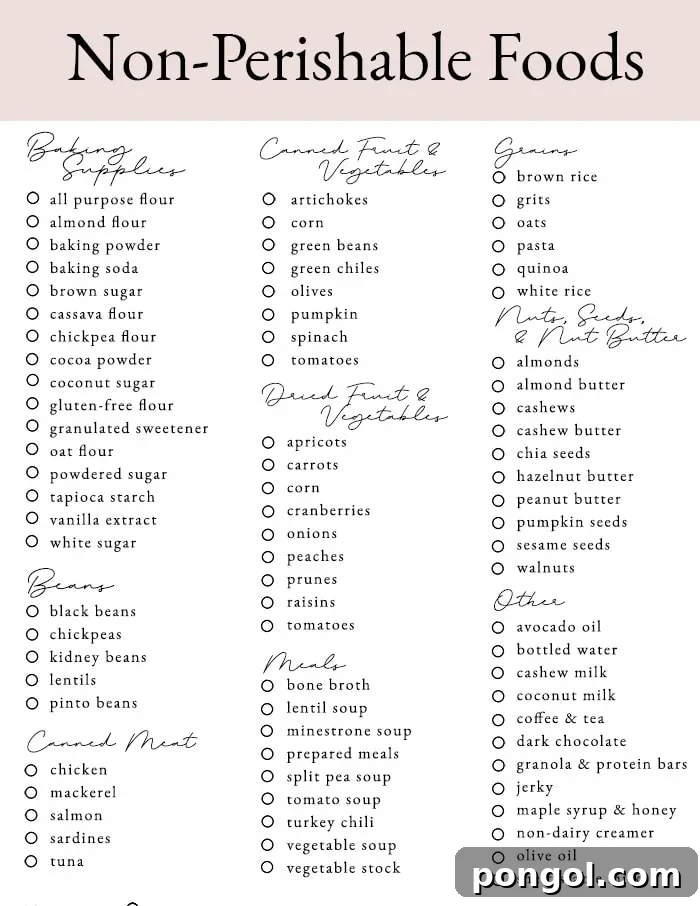
Download your convenient printable non-perishable pantry shopping list here!
Building Your Resilient Pantry: Practical Tips for Stocking and Organization
Establishing a comprehensive and effective pantry stocked with non-perishable foods is a continuous journey, not a single task. Start by assessing your current inventory and identifying any gaps based on your family’s unique dietary needs, preferences, and consumption patterns. When you go grocery shopping, try to adopt a “buy a little extra” strategy: purchase an additional item or two of your most frequently used pantry staples each time. This gradual approach prevents overwhelming your budget and helps you build up robust supplies steadily over time. Consider embracing an “eat what you store and store what you eat” philosophy to ensure regular rotation of your stock and minimize any potential food waste.
Organization is absolutely paramount to maintaining an efficient and user-friendly pantry. Utilize clear, airtight containers for dry goods to protect them from pests and moisture. Label everything clearly with both the purchase date and an estimated expiration date. Arrange items using the “first in, first out” (FIFO) method: place newer items behind older ones so that products nearing their expiration are used first. Designate specific shelves or areas for different categories of food, making it significantly easier to find what you need and accurately monitor your stock levels. A well-organized pantry not only looks tidy but also streamlines meal preparation, reduces stress during busy times, and empowers you with greater control over your food supply, ensuring you’re always prepared and eating well.
Explore More Health & Wellness Resources for a Holistic Lifestyle
Beyond meticulously stocking your pantry, adopting a holistic approach to health and wellness further supports a resilient and thriving lifestyle. Dive deeper into related topics to enhance your overall well-being and preparedness:
- How To Keep Up a Healthy Lifestyle When You’re Stuck at Home
- DIY Disinfectant Spray (DIY Lysol Spray)
- Benefits of Ashwagandha
- Medicinal Mushrooms for Anxiety
- Benefits of Chlorella
- Benefits of Moringa
- How To Digital-Detox
Thank you for joining us on this comprehensive journey to a better-stocked and more resilient pantry! We sincerely hope this guide empowers you to make informed and healthy choices for your home and overall well-being. Don’t forget to connect with us on social media for more healthy living tips, delicious recipes, and inspiring content. Follow us on Instagram, Pinterest, and Facebook to stay connected with our community!